Reducing friction in a sales-critical registration flow
• PREMIADO

• PREMIADO

@

@

LEMON ENERGIA

LEMON ENERGIA

Context

Lemon Energia is a Series A climate-tech company providing clean energy through distributed generation, primarily to small and medium-sized businesses.

Customer acquisition requires collecting legally valid information related to electricity account ownership and eligibility.

My Role

Owned problem framing, flow redesign, and usability validation. Worked closely with sales and engineering to balance user clarity, operational constraints, and lead capture.

Solution and Impact

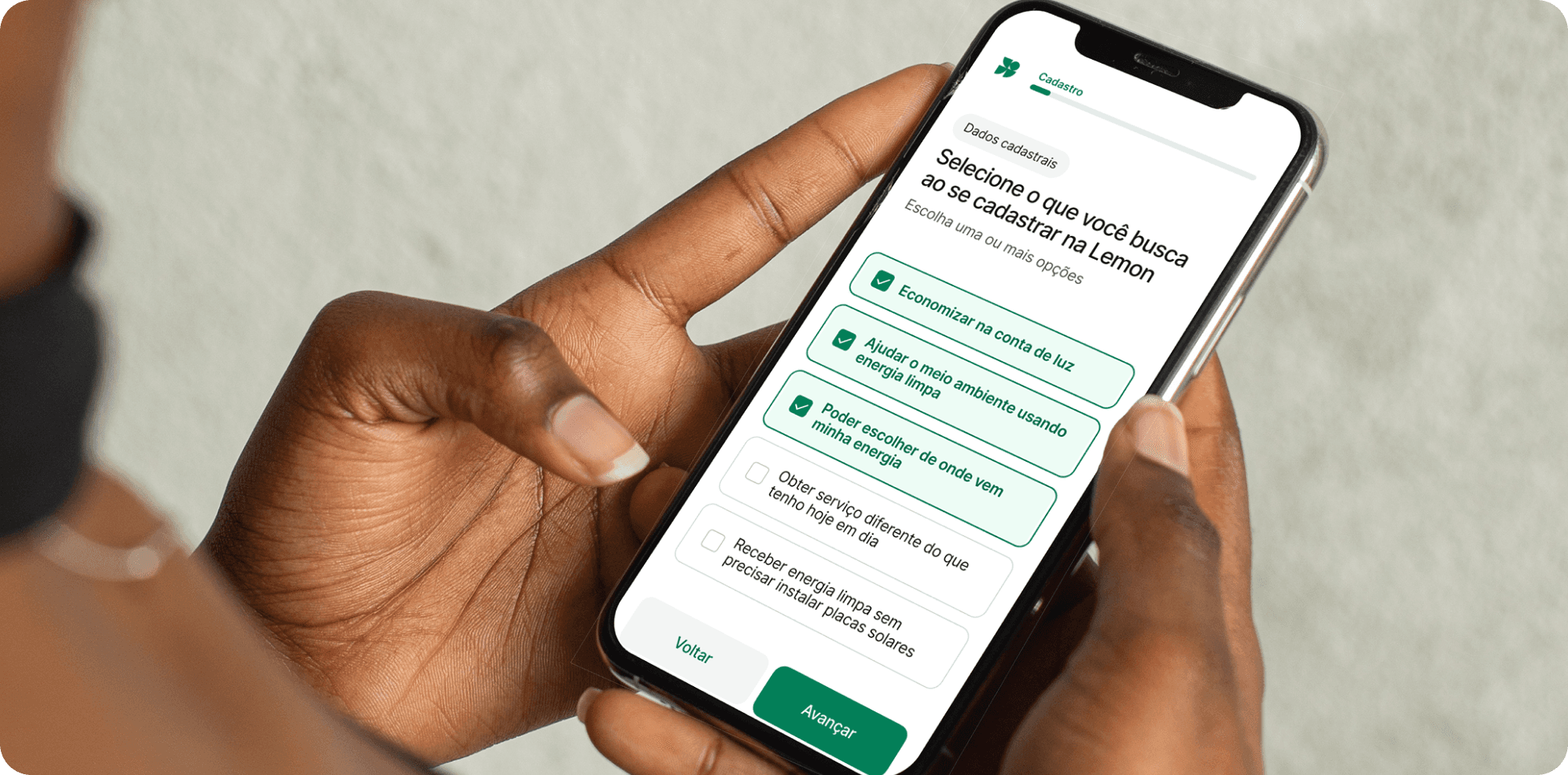
To enhance the registration process, I implemented a segmented flow that identified different types of users, providing contextualized instructions and data to inform future prioritization.

📉

62.2% error reduction

Observed input errors decreased by 62.2% compared to a similar usability study conducted the previous year

🤩

Less friction in user experience

User interviews validated our hypothesis that segmentation helped contextualize users, reducing confusion throughout the acquisition flow.

Problem

The acquisition registration flow took ~20 minutes and assumed the registrant was the electricity bill account holder.

In practice, this was incorrect. Sales reported recurring cases of incorrect ownership data, contracts requiring full reprocessing and re-signing, and confusion when the actual account holder was unaware a contract had been initiated by an employee or spouse.

Precise baseline error rates were unavailable, but the issue was recurring and created operational overhead that delayed conversion and degraded customer experience.
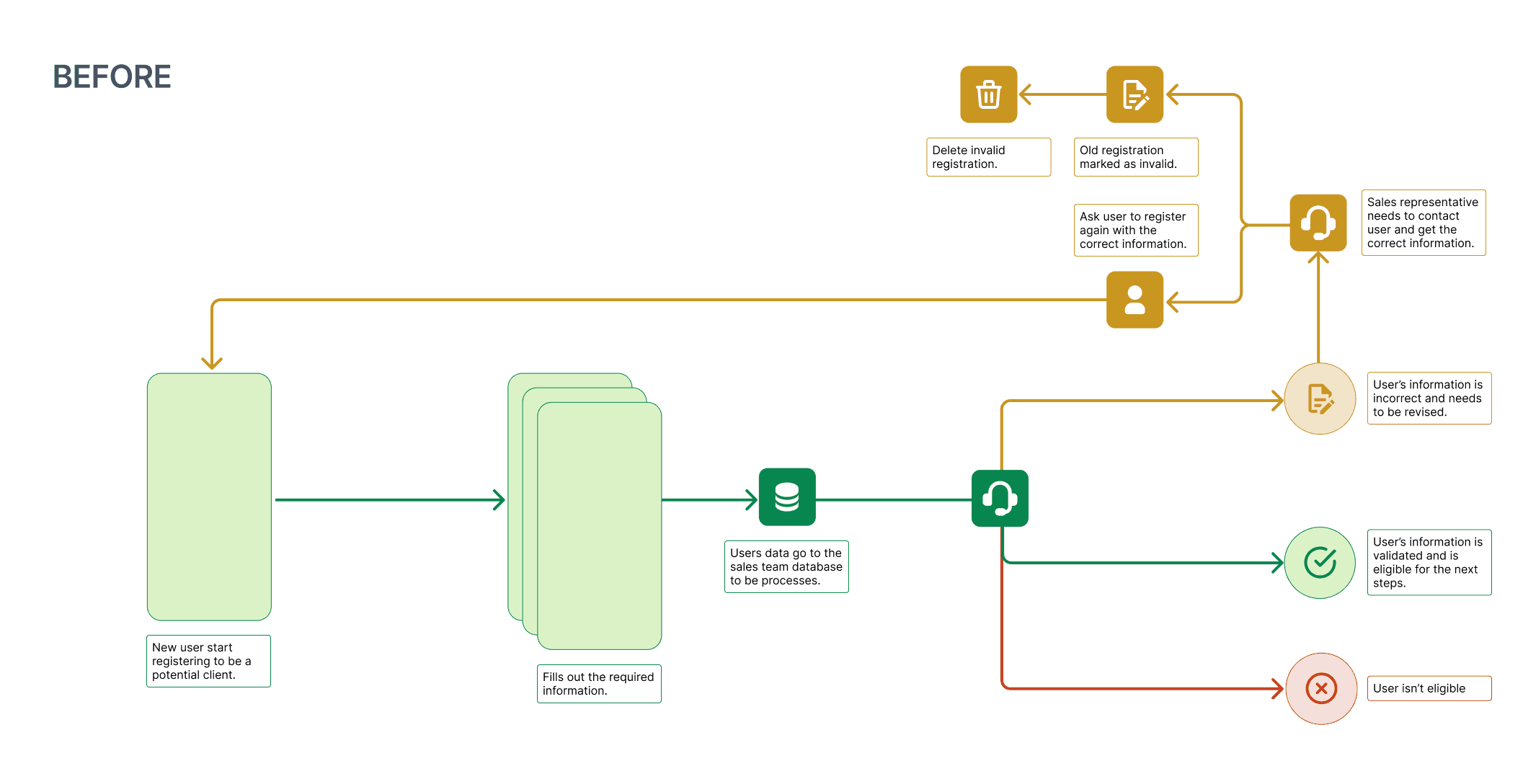
Image: High-level registration flow prior to the introduction of segmentation.

Investigation

After reviewing the acquisition flow and interviewing two sales representatives to understand common issues, a consistent pattern emerged:

  • Registrants were acting on behalf of the account holder, causing incorrect ownership data.

  • The flow did not distinguish between registrant and legal signer, requiring contract reprocessing.

  • A single flow served different profiles, confusing users and causing them to submit incorrect data.

  • Some users weren't eligible to benefit from the service, creating an inefficient pool of leads.

After reviewing the acquisition flow and interviewing two sales representatives to understand common issues, a consistent pattern emerged:

  • Registrants were acting on behalf of the account holder, causing incorrect ownership data.

  • The flow did not distinguish between registrant and legal signer, requiring contract reprocessing.

  • A single flow served different profiles, confusing users and causing them to submit incorrect data.

  • Some users weren't eligible to benefit from the service, creating an inefficient pool of leads.

After reviewing the acquisition flow and interviewing two sales representatives to understand common issues, a consistent pattern emerged:

  • Registrants were acting on behalf of the account holder, causing incorrect ownership data.

  • The flow did not distinguish between registrant and legal signer, requiring contract reprocessing.

  • A single flow served different profiles, confusing users and causing them to submit incorrect data.

  • Some users weren't eligible to benefit from the service, creating an inefficient pool of leads.

Constraints

An early assumption was to qualify users based on eligibility (e.g., energy consumption, location) to filter contracts upfront. Talking with the sales team, they explained me the importance of users' contact information even for ineligible users, ruling out early disqualification.
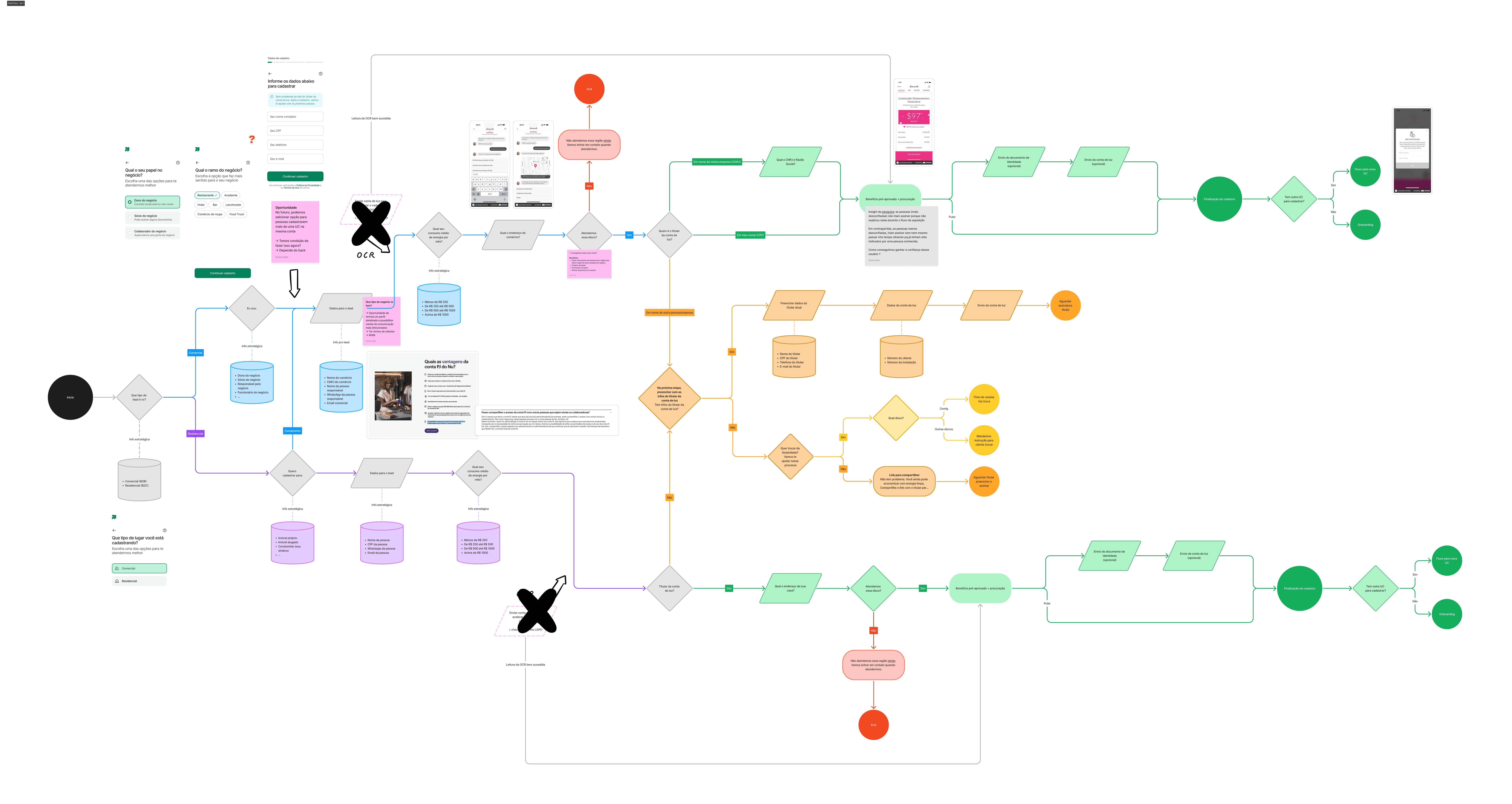
Image: Iterated user flow with segmentation.

Hypothesis

I hypothesized that adapting acquisition flow instructions based on user profile and signing authority would provide sufficient context for correct responses, reducing ownership-related errors without impacting lead volume.

Experiment

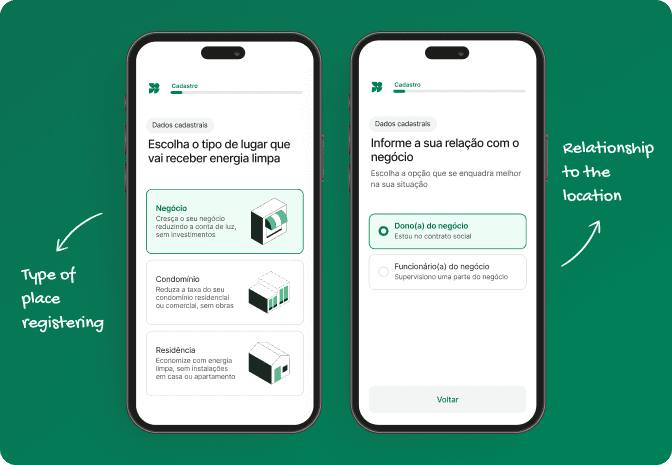
To identify if a user was able to sign a contract, I introduced a progressive segmentation:

1

Identifying property type (residence, business, condominium)

2

Clarifying the user’s relationship to the property and signing authority

After users were classified, instructions and required fields adapted to ask follow-up information in a more contextualized way.

The redesigned flow explicitly distinguished between users who could sign directly and those who needed to involve the account holder.
Cross-Functional Integration
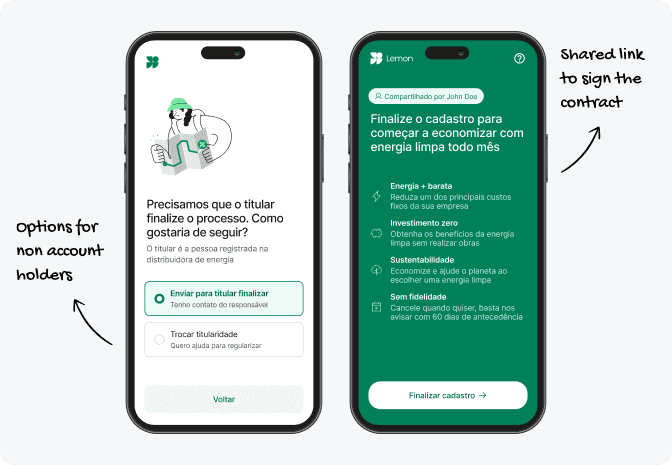
In parallel, another Product Designer was addressing an initiative to improve contract-signing workflow. We collaborated to align handoff, ensuring continuity between registration and contract completion.

This enabled implementation of:

  • A shareable link to forward the signing workflow to the correct person.

  • Additional support channel to help users with eligibility.

These paths reduced dead ends and prevented new leads from restarting registration.

In parallel, another Product Designer was addressing an initiative to improve contract-signing workflow. We collaborated to align handoff, ensuring continuity between registration and contract completion.

This enabled implementation of:

  • A shareable link to forward the signing workflow to the correct person.

  • Additional support channel to help users with eligibility.

These paths reduced dead ends and prevented new leads from restarting registration.

In parallel, another Product Designer was addressing an initiative to improve contract-signing workflow. We collaborated to align handoff, ensuring continuity between registration and contract completion.

This enabled implementation of:

  • A shareable link to forward the signing workflow to the correct person.

  • Additional support channel to help users with eligibility.

These paths reduced dead ends and prevented new leads from restarting registration.

Strategic Data Collection

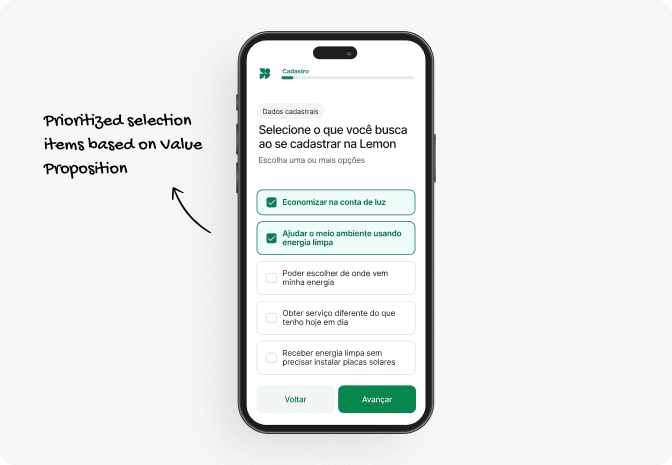
At the time, the company was exploring new customer segments and lacked information on users' profiles. To help with future strategies, I added a targeted question to capture user motivation for adopting clean energy, generating directional data to inform future prioritization.
Validation
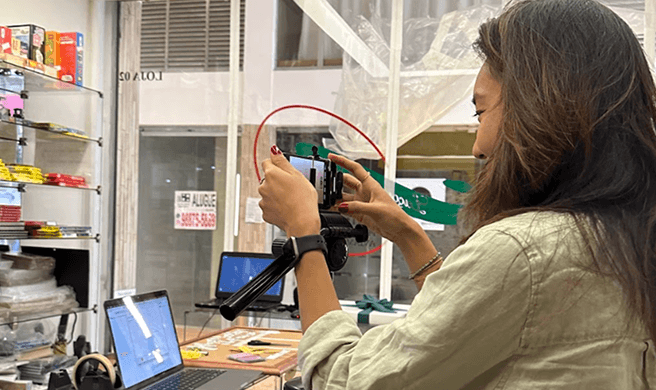
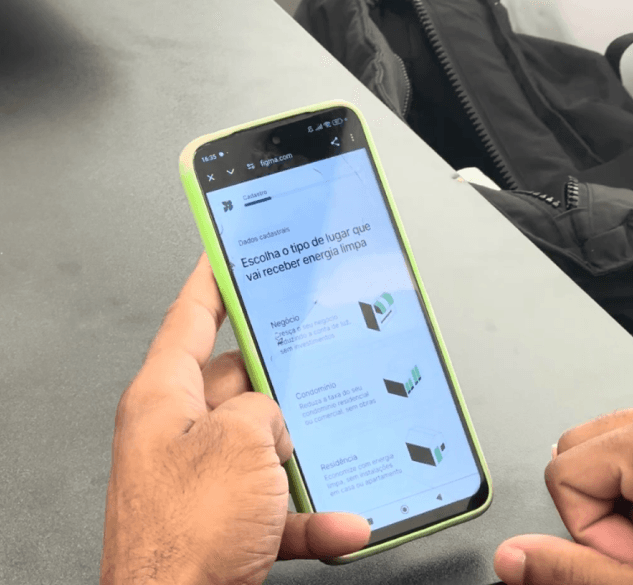
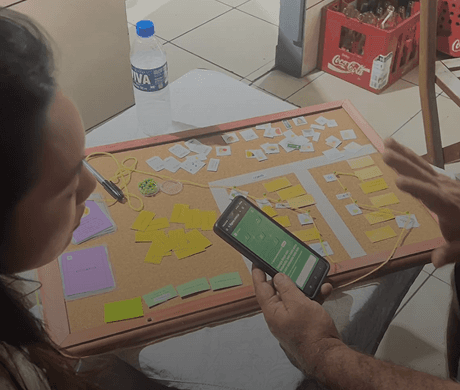
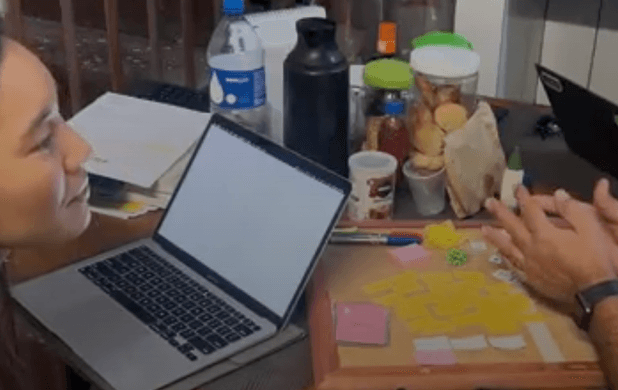
Working with another Product Designer, we ran in-person usability tests and mental-model tasks to validate solutions and uncover opportunities.

Results:

  • 7 of 9 participants completed registration with correct ownership and eligibility data.

  • Input errors decreased by 62.2% compared to a comparable usability study from the previous year.


Limitations:

  • Small sample size due to challenges recruiting B2B participants.

Working with another Product Designer, we ran in-person usability tests and mental-model tasks to validate solutions and uncover opportunities.

Results:

  • 7 of 9 participants completed registration with correct ownership and eligibility data.

  • Input errors decreased by 62.2% compared to a comparable usability study from the previous year.


Limitations:

  • Small sample size due to challenges recruiting B2B participants.

Working with another Product Designer, we ran in-person usability tests and mental-model tasks to validate solutions and uncover opportunities.

Results:

  • 7 of 9 participants completed registration with correct ownership and eligibility data.

  • Input errors decreased by 62.2% compared to a comparable usability study from the previous year.


Limitations:

  • Small sample size due to challenges recruiting B2B participants.

Status and Next Steps

At project close, the redesigned flow was validated through usability testing but had not yet launched.

Post-launch success metrics :

  • Ownership-related data errors

  • Contract revisions requiring re-signing

  • Lead conversion time

At project close, the redesigned flow was validated through usability testing but had not yet launched.

Post-launch success metrics :

  • Ownership-related data errors

  • Contract revisions requiring re-signing

  • Lead conversion time

At project close, the redesigned flow was validated through usability testing but had not yet launched.

Post-launch success metrics :

  • Ownership-related data errors

  • Contract revisions requiring re-signing

  • Lead conversion time

Checkout Lemon Energia Registration Flow

Checkout Lemon Energia Registration Flow

🍋 Go to Lemon

Thank you for reading!

Let's connect!

Karina Sato ©️ 2026

Product Designer

Karina Sato ©️ 2026

Product Designer

Karina Sato ©️ 2026

Product Designer

Create a free website with Framer, the website builder loved by startups, designers and agencies.